

All classes are two and a half days, and held in the first and second floor classrooms at the Turner Center on the Chautauqua Institution campus. Complete supply lists will be sent to students after confirmation of class list.
Whoopie, We’re All Gonna Dye! Space-dyeing Silk Warps
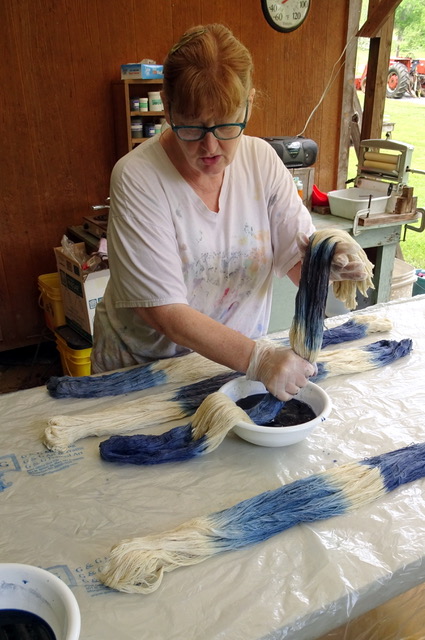
Instructor: Neal Howard
Space-dyeing or dip dyeing (sometimes thought of as faux ikat) is a fun, non-technical, loosely controlled way to color your warp threads before weaving. Using Jacquard liquid red label dyes, the class will do some dye sampling and color theory dabbling. Students will design, wind, and space dye warps for weaving one project.
Level of experience required: Students need to be comfortable calculating and winding warps on their own.
Tapestry Pulled Warp Workshop
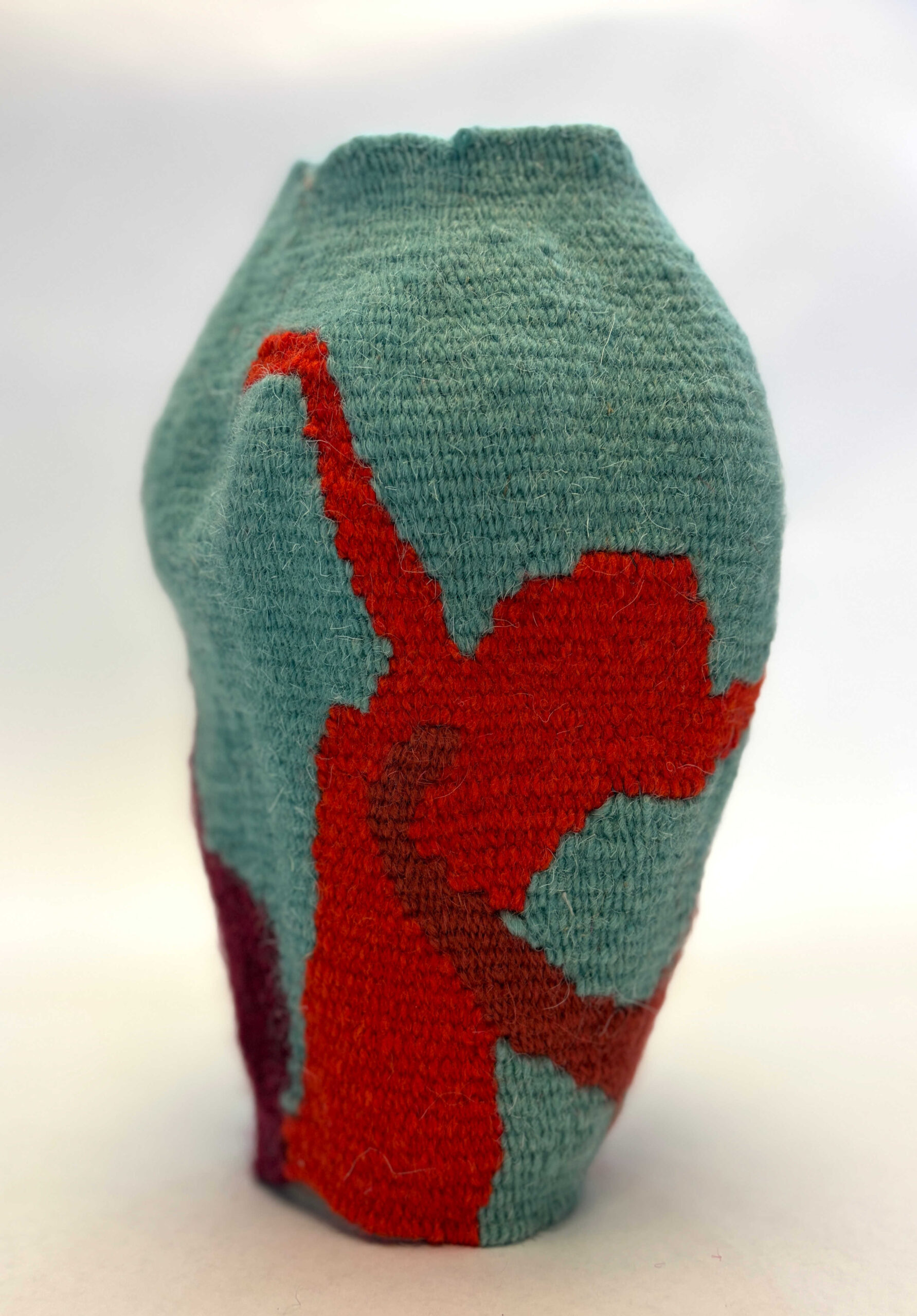
Instructor: Barbara Burns
Expand your horizons in tapestry. Create a three-dimensional form from flat weaving using the tapestry technique of pulled warp. The technique works similarly to darts in a dress pattern. In tapestry, areas of warp are left exposed. Once removed from the simple frame loom the warp is pulled to create shape and dimension.
Instructor Barbara Burns will guide students through each step of the process from start to finish. The workshop is suitable for weavers with experience with tapestry weaving who wish to explore a different facet of the medium.
Level of experience required: Advanced beginner and above.
Wet Felted Vessels & Pods
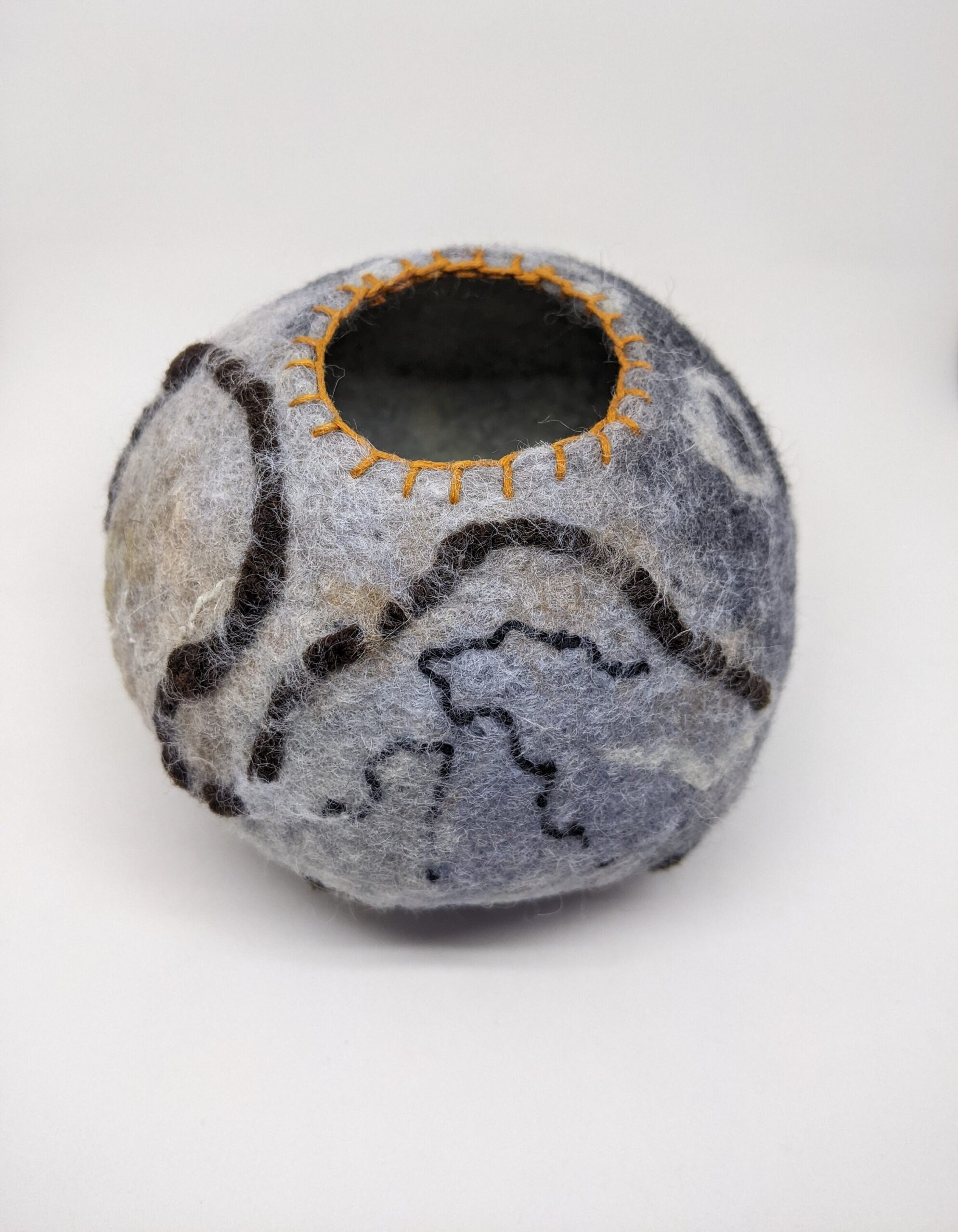
Instructor: Debbie Penley
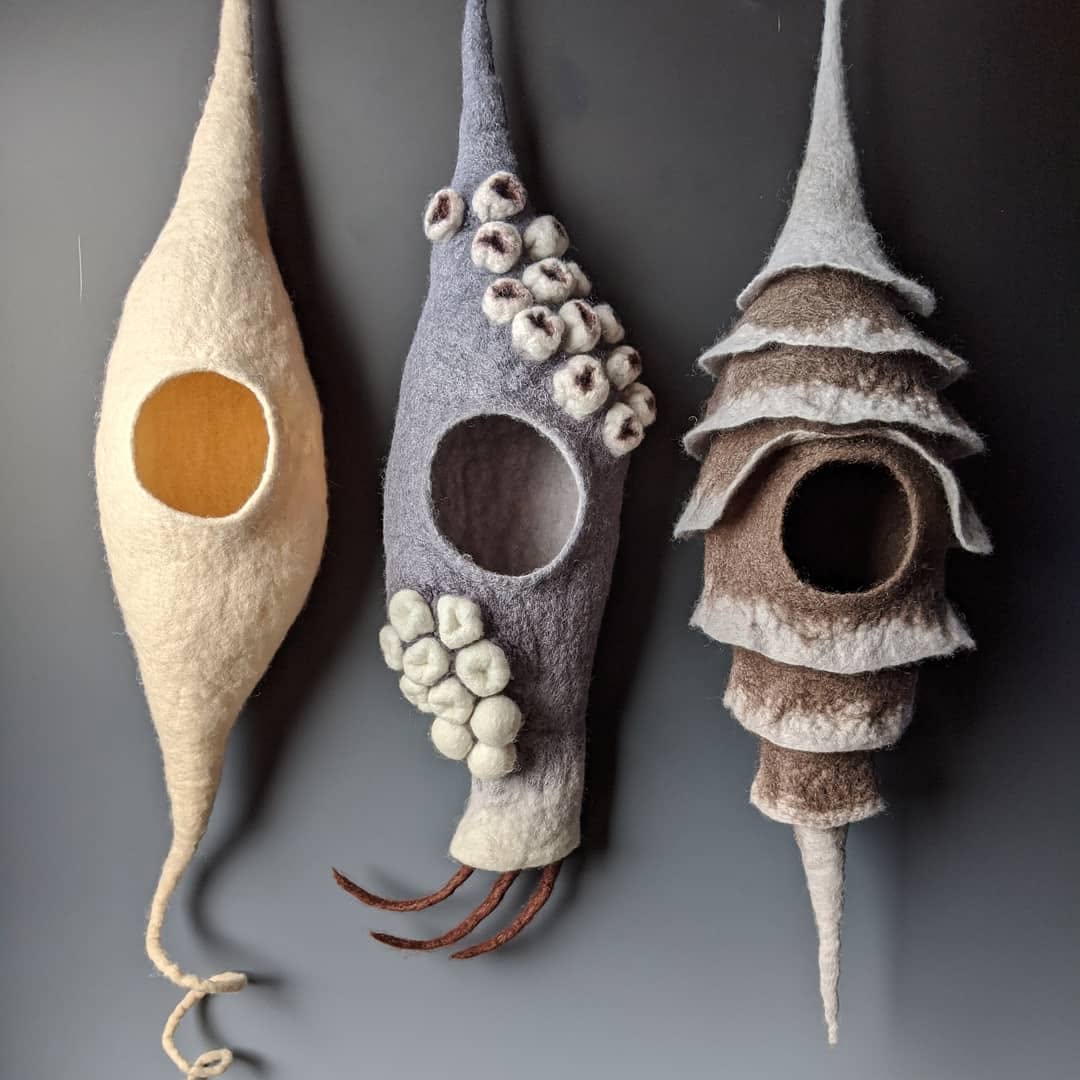
In this class students will learn how to create 3-Dimensional pieces of felt using resists, starting with “simple” bowls, and working our way up to pods with protuberances. Students will get a feel for how to plan for the kind of shape they are looking for, as well as how to attach felt appendages securely. This class is available to beginners as we will work our way up to the most complicated aspects, though a basic knowledge of wet felting will be helpful and allow students to go further in their study.
Level of experience required: Beginners to advanced.
Sewing Your Handmade Fabrics
Instructor: Liz Spear
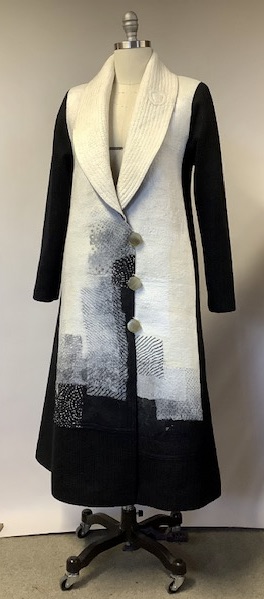
Gather together handwoven fabrics to learn to cut-n-sew a garment you’ll be proud to wear. Each student will design their own project in this process-based workshop; whether students weave new yardage with a specific garment in mind or find that jacket students made thirty years ago (with the HUGE shoulder pads or stain on the lapel or that pile of shawls and scarves students no longer wear) Maybe students have workshop samples or extra towels to use. Students will find the inspiration to piece parts together. Students select a pattern, commercial or original, and test-fit on their own; an Information/Suggestions document will be sent upon Registration, and all are encouraged to contact Liz by email with questions and concerns.
Level of experience required: Intermediate sewing skills.
A New Spin on Color: Exploring Dyed Top Through Spinning and Weaving
Instructor: Alanna Wilcox
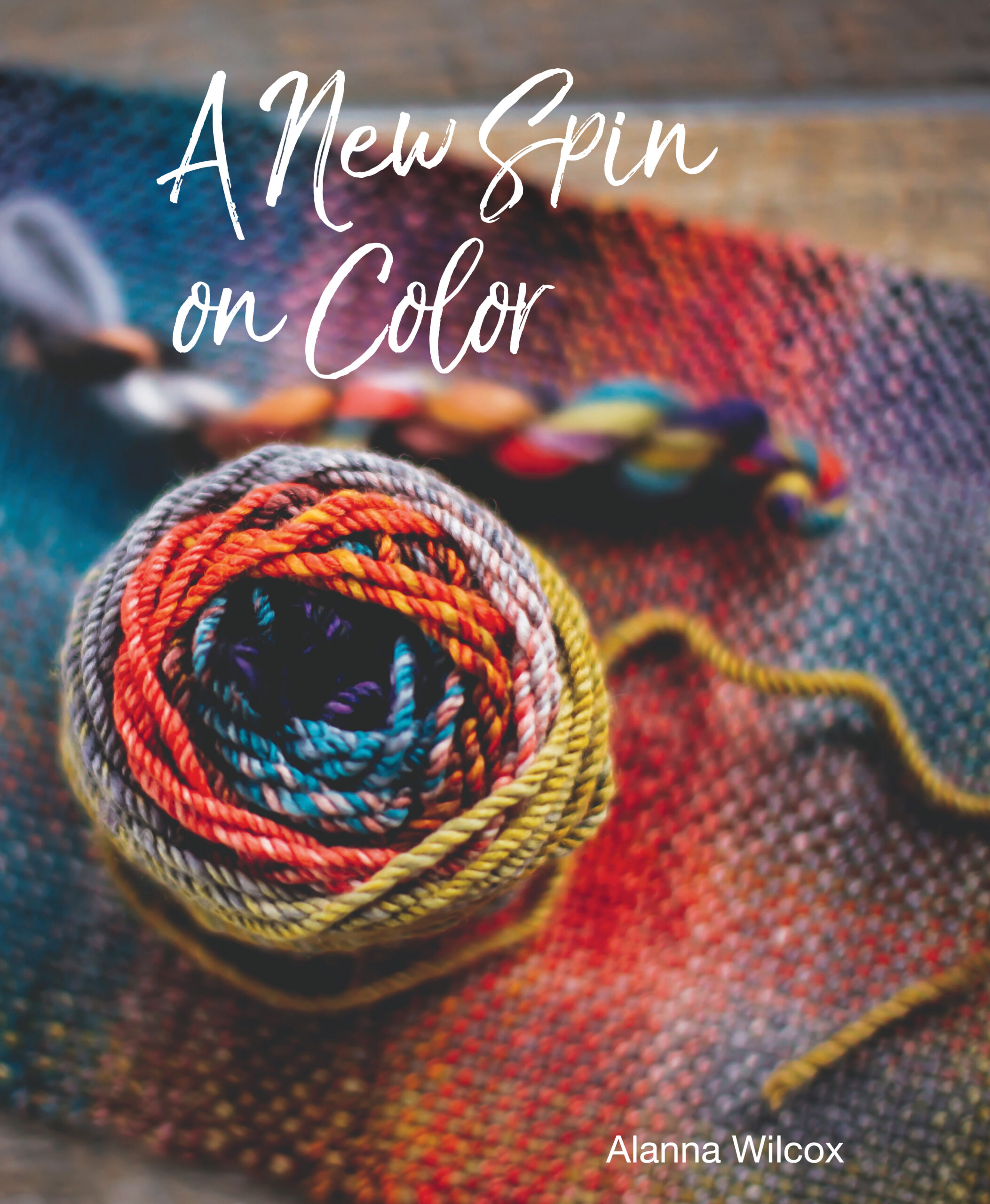
Based on concepts from my book, A New Spin on Color, this 2.5-day workshop explores practical approaches to spinning hand-dyed fiber with greater confidence and intention. You’ll learn how preparation, drafting, spinning techniques, and plying choices influence color in the finished yarn and how those choices affect the appearance of woven cloth. Through hands-on sampling, yarn analysis, and woven examples, you’ll develop a framework for making intentional color decisions rather than relying on guesswork. This workshop is appropriate for advanced beginners through intermediate spinners who are comfortable spinning a continuous yarn and are interested in exploring color, yarn design, and the relationship between spinning and weaving.
Level of experience required: Advanced beginners through intermediate spinners
Double Weave Pick Up Workshop
Instructor: Sarah Gotowka
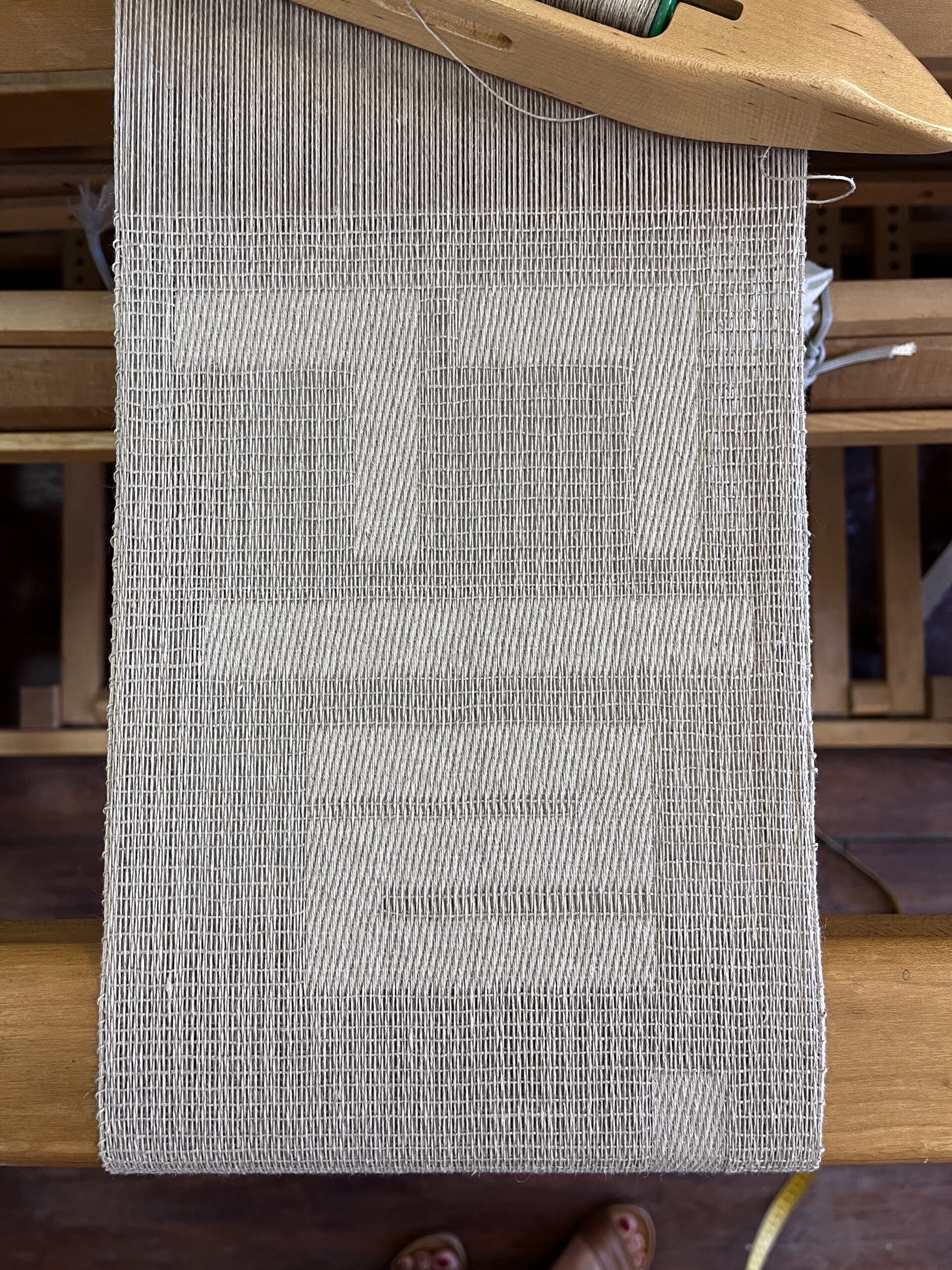
In this workshop you will learn the simple but tricky technique of double weave pick up. Double weaves allow you to double the width of your cloth, or insert pockets and tubes, where double weaves pick up allow you to create reversible designs into your cloth, from geometric shapes to text. We will cover it ALL and have fun doing it!
This class is perfect for anyone looking to optimize their small loom for wider projects, embed graphics/text into their cloth, or just to deepen their knowledge of weaving.
Level of experience required: Beginner – Intermediate. Must have prior experience dressing a loom.
Echoes in Thread: Designing and Weaving Echo & Jin
Instructor: Sydney Sogol
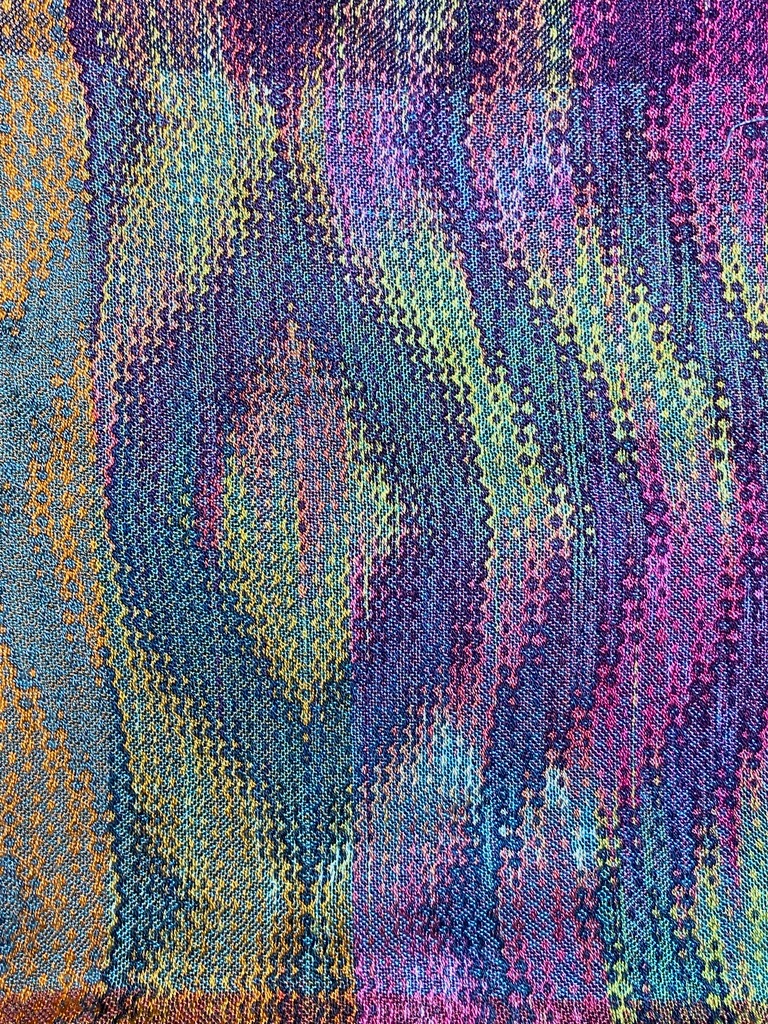
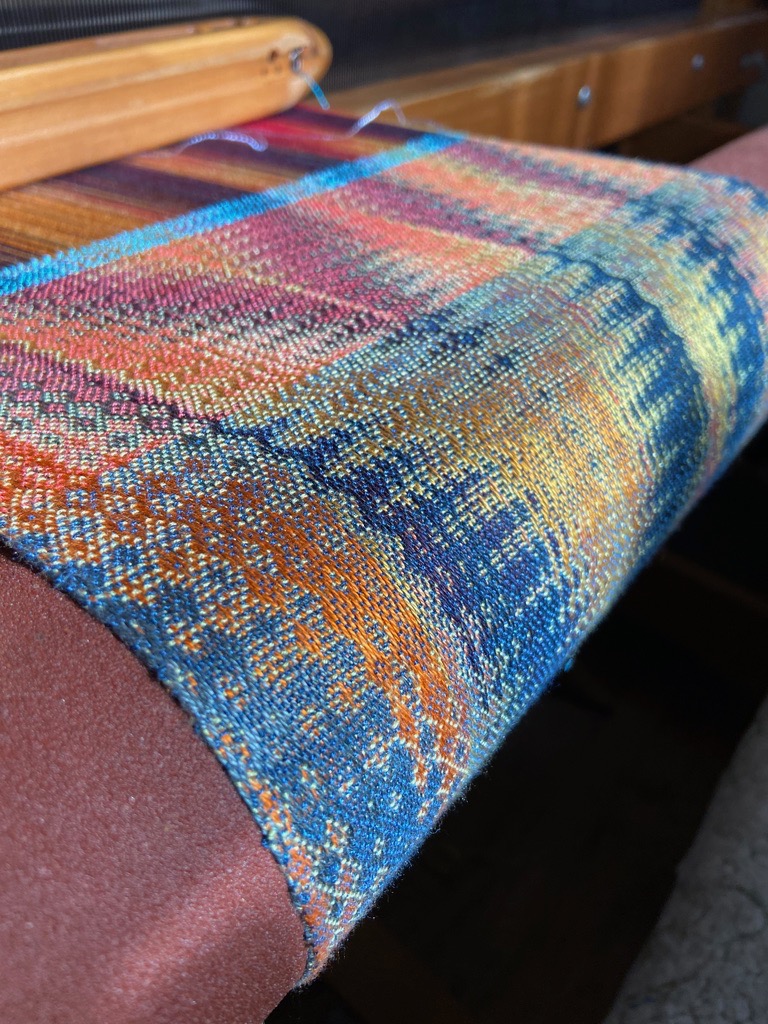
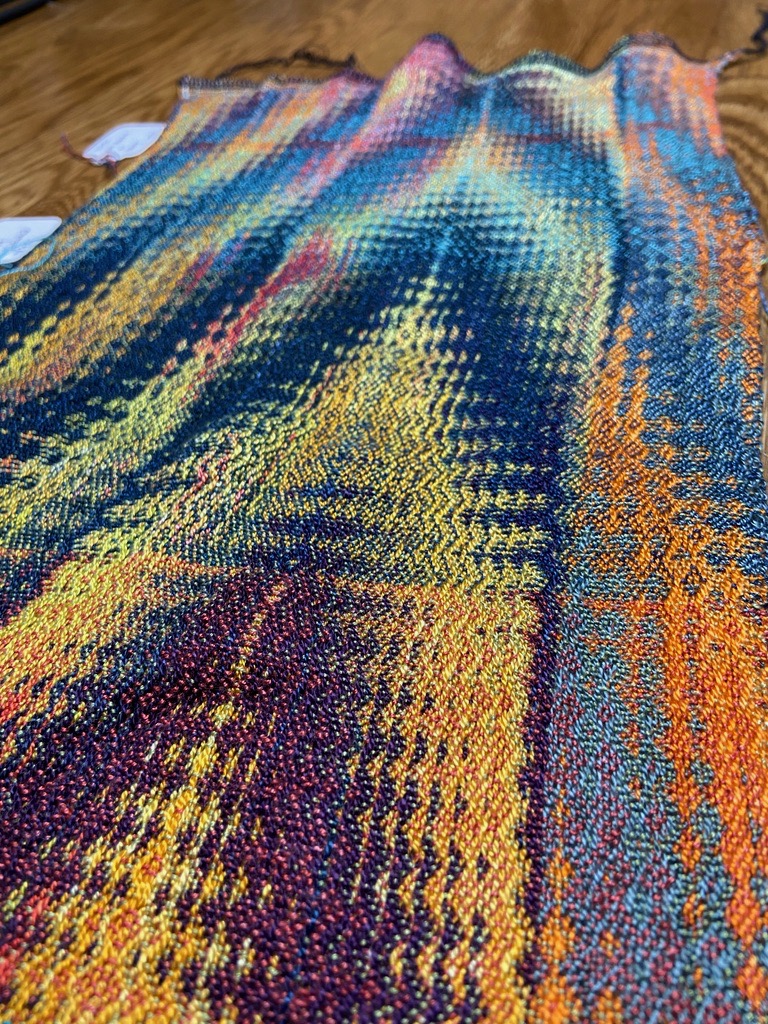
Echo and Jin weaving create stunning visual depth, movement, and color interaction through the strategic use of parallel design lines, turned drafts, and color interactions. In this intensive 2 or 2.5 day workshop, students will explore both the technical foundations and creative possibilities of Echo and Jin.
Topics covered include:
- Understanding the pattern relationship between Echo and Jin
- Reading and understanding profile drafts and turned drafts
- Color interaction and yarn selection for maximum visual impact
- Designing effective warp and weft combinations
- Working with value, contrast, and color sequencing
- Draft manipulation and design exploration
- Troubleshooting common structural and visual issues
- Creating movement, curves, and dimensional effects through design
- Strategies for scaling designs from samples to finished projects
Students will weave multiple samples while experimenting with different yarn combinations and setts to better understand how structure and color interact. Time will also be devoted to design development, so students leave with ideas and drafts for future projects. Depending on workshop length, students may complete either an in-depth sample book or a small finished piece such as a scarf panel, decorative textile, or study series.
Level of experience required: Intermediate to advanced weavers. Students should be comfortable dressing their own loom and reading weaving drafts. Prior experience with multi-shaft weaving is required. This workshop is best suited to weavers with experience weaving from drafts who are interested in expanding their design vocabulary and exploring complex color-and-structure interactions.